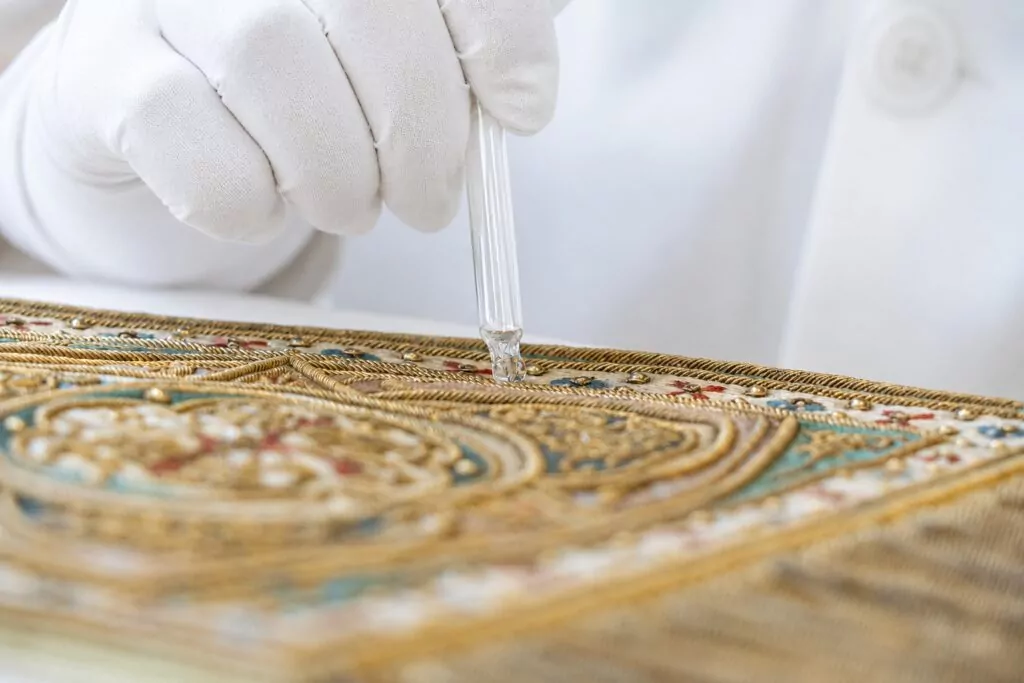
Science Patience Passion
A collective of specialists dedicated to the conservation, restoration and promotion of textile heritage
The Galli Heritage Collective
Our mission is to help you preserve your textile collections, from medieval tapestries to antique furnishings and ceremonial garments.
+0clients
PUBLIC AND PRIVATE INSTITUTIONS, FOUNDATIONS, RESEARCH INSTITUTES AND PRIVATE CLIENTS.
00collaborators
QUALIFIED TEXTILE CONSERVATORS-RESTORERS TECHNICIANS AND A CHEMIST
0m2 of workshop
QUALIFIED TEXTILE CONSERVATORS-RESTORERS TECHNICIANS AND A CHEMIST
0pays
FRANCE AND INTERNATIONALLY
The benefits of working with us
- Nothing irreversible. Treatments are tested and precisely targeted, with the aim of protecting the artwork.
- Informed decisions. You remain in control and can make decisions based on a clear understanding of the proposed treatments.
- Advanced solutions. Large-format artwork cleaning, textile laser cleaning and multispectral imaging.
- Enhanced visibility. Showcase your commitment to heritage through content dedicated to restoration projects.

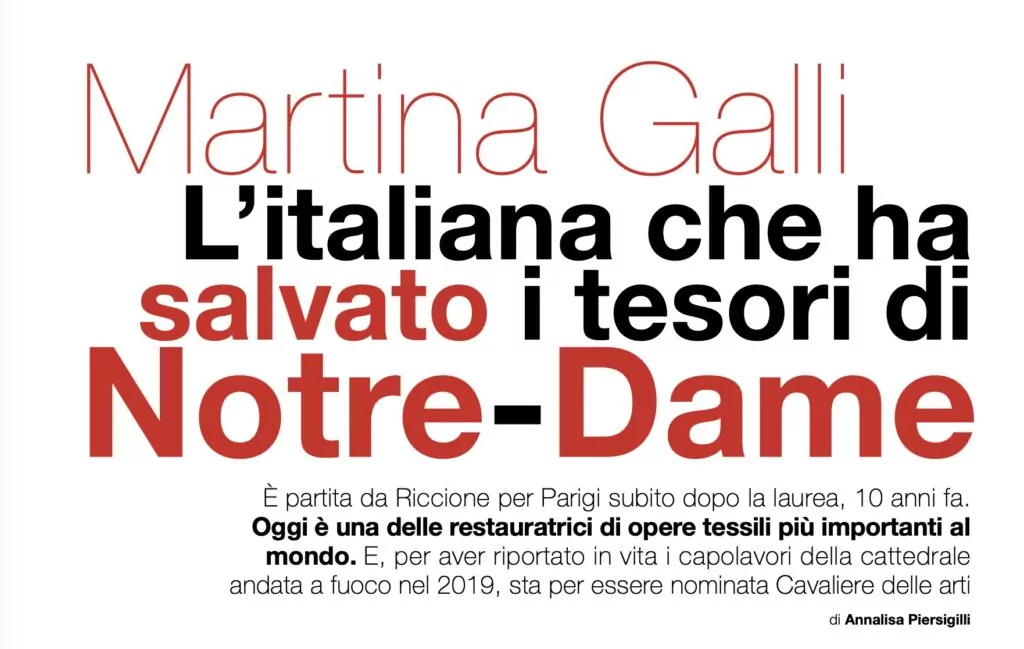
Martina Galli
Founder and Heritage Conservator-Restorer
“ Together, let us ensure that the works that once inspired wonder continue to do so long after we are gone. ”
This conviction is at the heart of our collective: every textile artwork should continue to be discovered, experienced and appreciated by our generation and those to come.
Restoration is not about freezing an artwork in time. It is about recovering the original craftsmanship without ever betraying it. At Galli Heritage, the careful control of every intervention is a quiet duty owed both to the masters of the past and to future generations.
In a discipline that demands science, patience and passion, every intervention fulfils the same commitment expected by our clients and their audiences: to keep the power of wonder alive, with the utmost respect.
Welcome to GALLI HERITAGE.
A restoration project?
Our Expertise
Our Four Areas of Activity
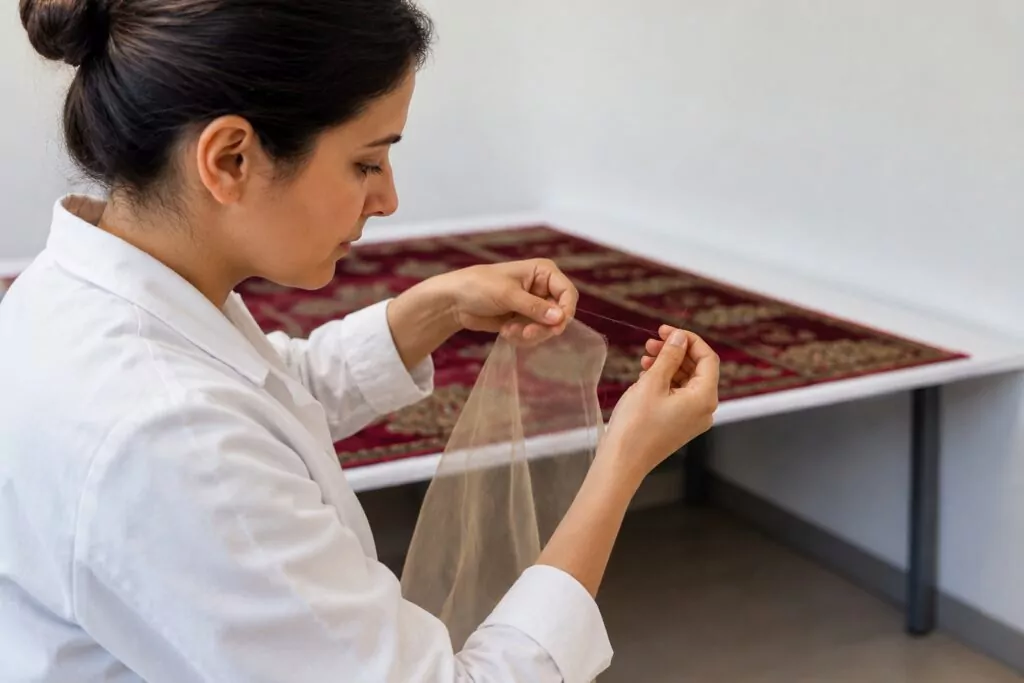
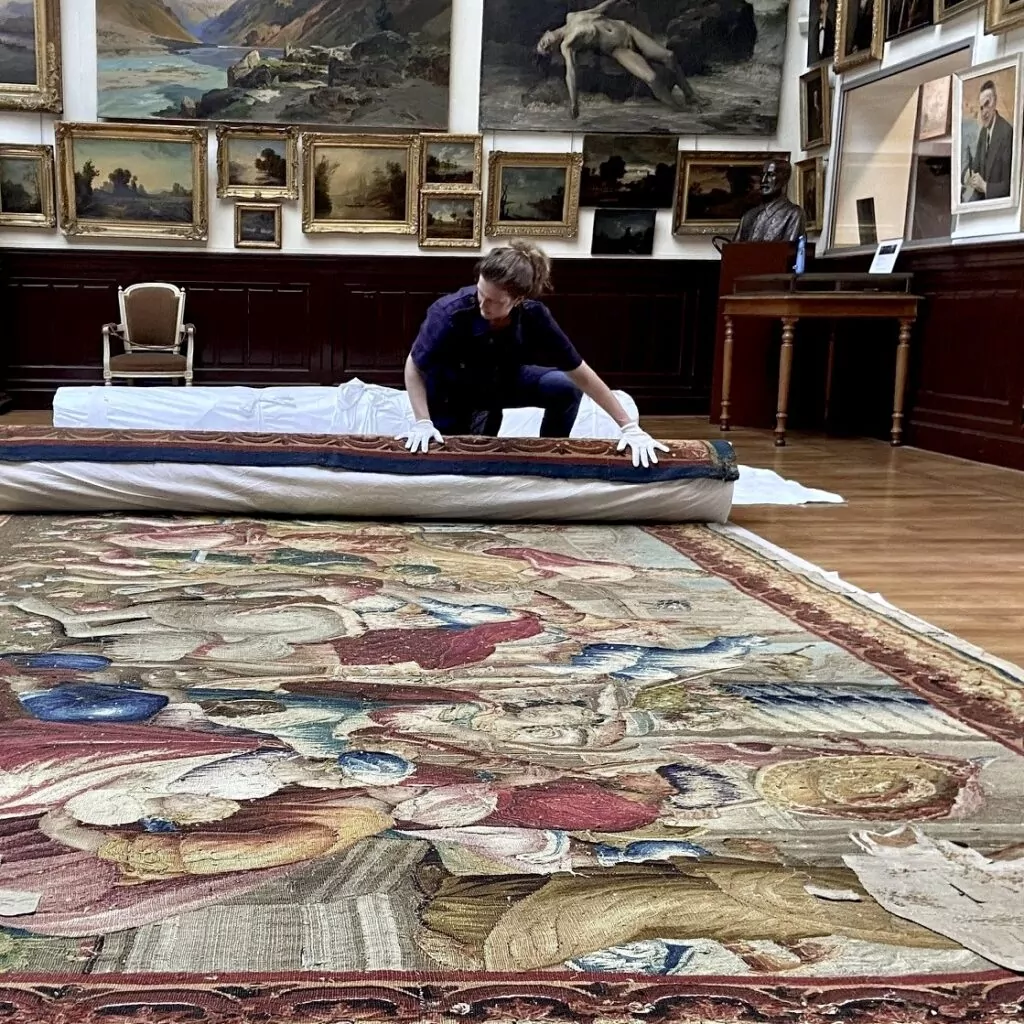
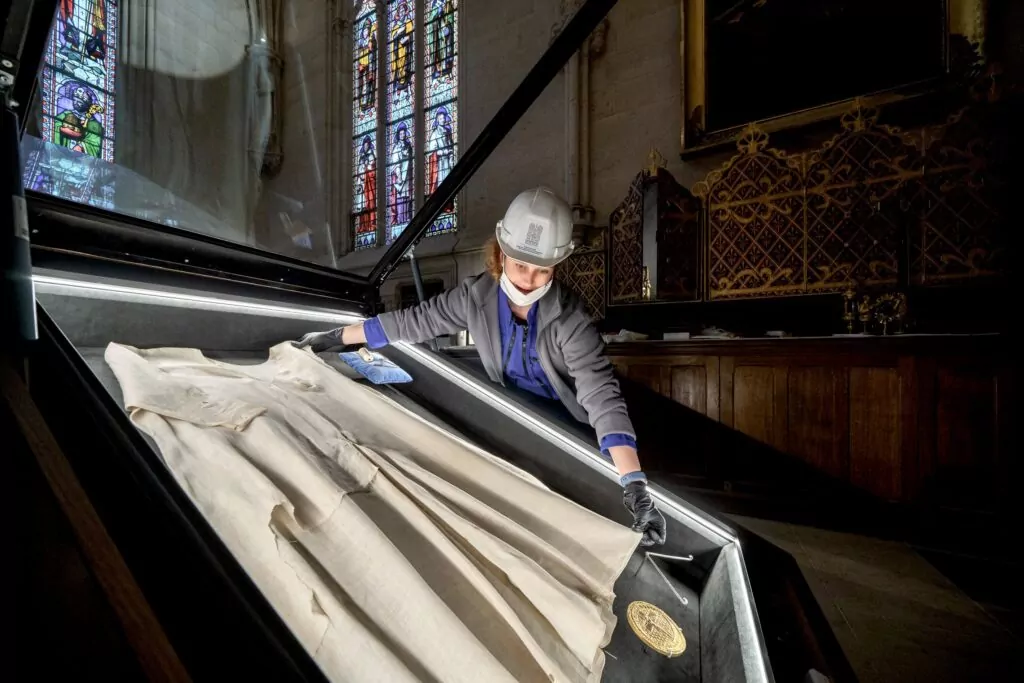
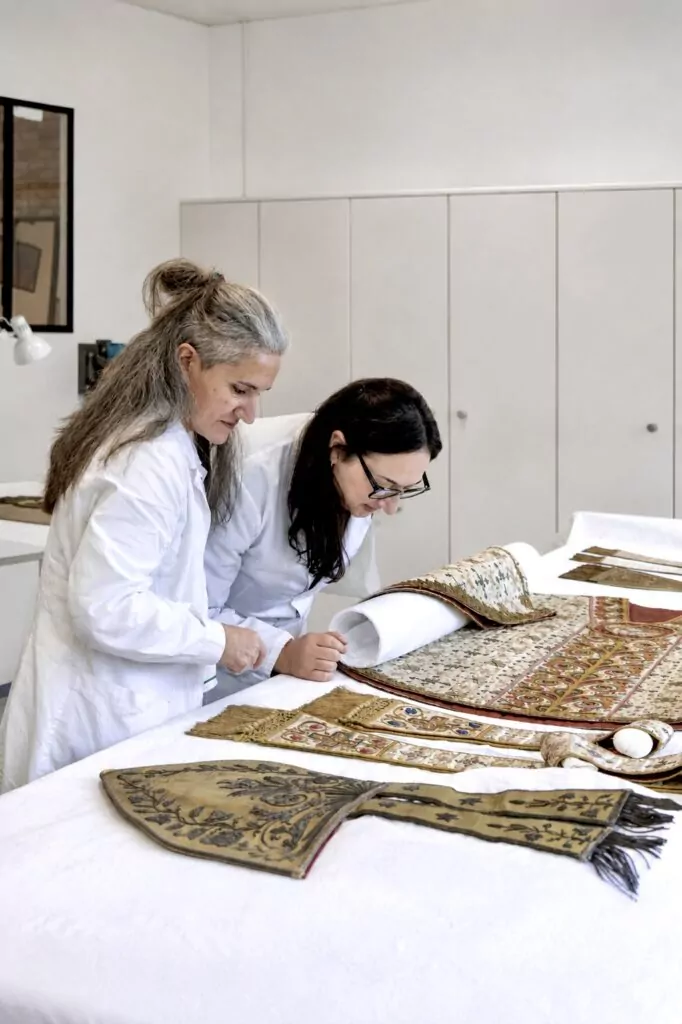
Restoration
Restoring an artwork’s visual and structural integrity. Every treatment is designed to be reversible, identifiable and documented in a written report.
- MICRO-VACUUMING
- AQUEOUS CLEANING
- TEXTILE LASER CLEANING
- LINING AND BACKING
- HANGING AND SUSPENSION SYSTEMS
Conservation
Providing condition reports for artworks and collections, identifying conservation priorities and recommending long-term measures to ensure their preservation.
- COLLECTION CONSERVATION PROJECTS
- CONDITION REPORTS
- SCIENTIFIC ANALYSES
- EMERGENCY PLANS FOR CULTURAL COLLECTIONS
- BIOCIDAL TREATMENTS
- PROTECTIVE PACKAGING AND STORAGE
- EMERGENCY PLANNING
Promotion and Interpretation
Bringing restoration projects to the attention of your audiences, patrons and the press without oversimplifying the work involved.
- Restoration project launches and presentations
- Exhibition installation
- Multimedia content
- Sponsorship and patronage
- Expert reports
- Public engagement and interpretation
Training
Sharing practical conservation skills with collection staff, registrars and emerging conservators-restorers to ensure the long-term preservation of textile artworks.
- Preventive conservation
- Introduction to restoration techniques
- Studio visits and demonstrations
Types of Materials and Artworks We Treat
Our team brings together specialists with complementary skills. We work on a wide range of textile artworks, from archaeological finds to contemporary creations, using methods tailored to their specific characteristics and condition.
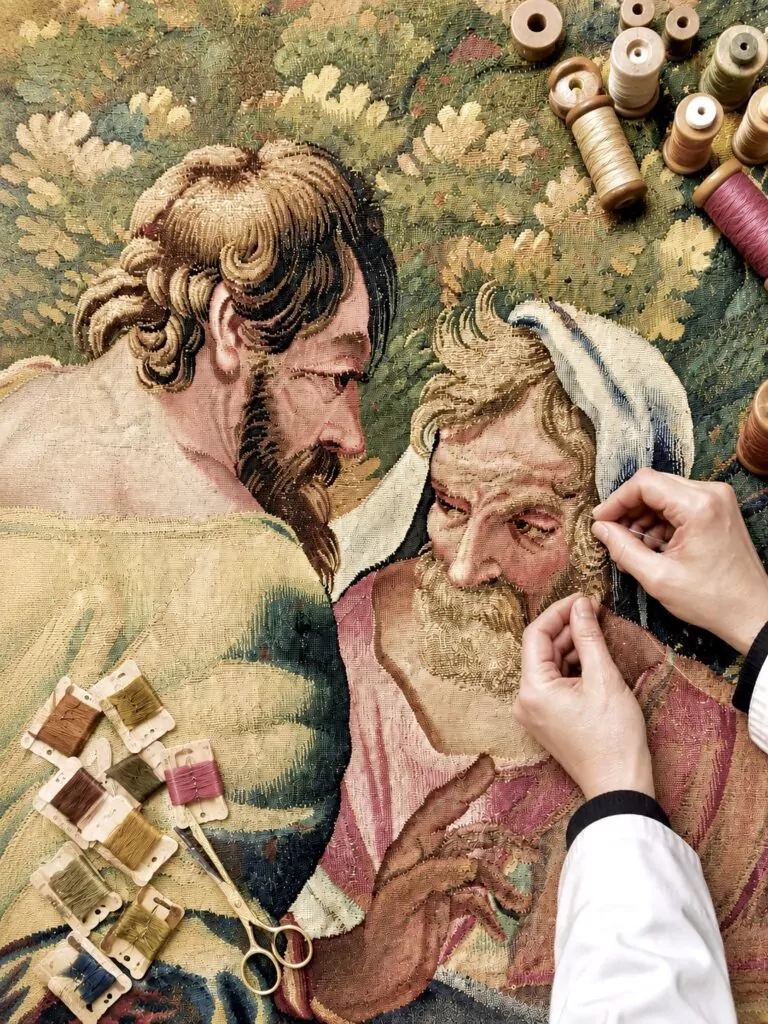
Tapestries
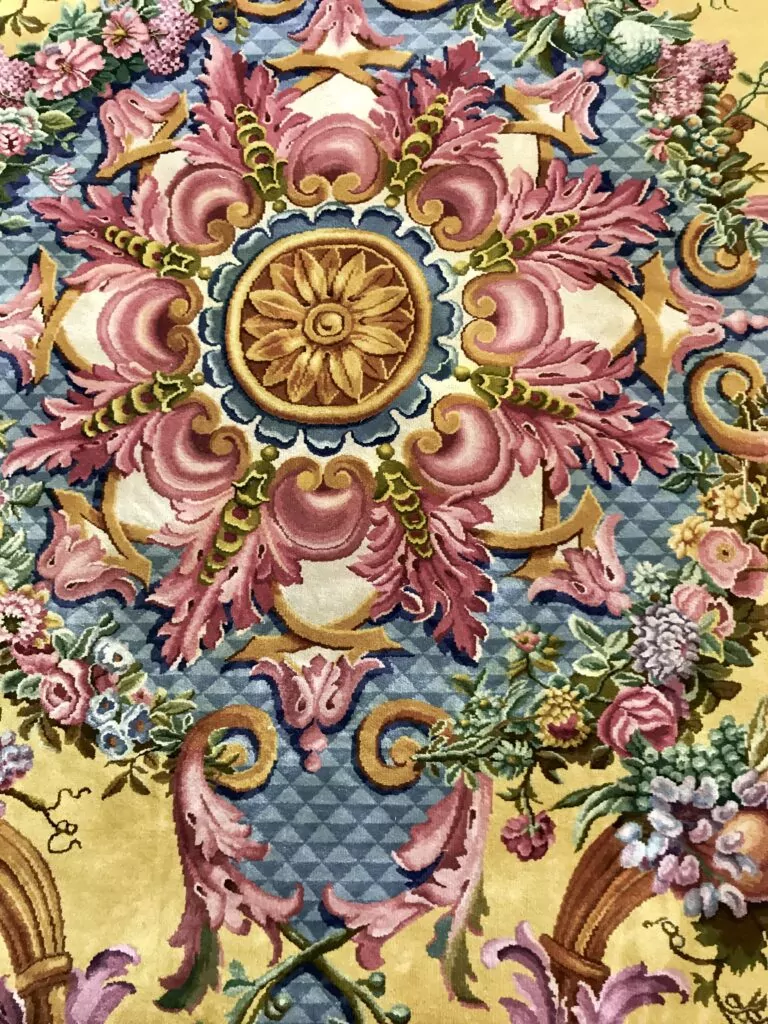
Carpets and rugs
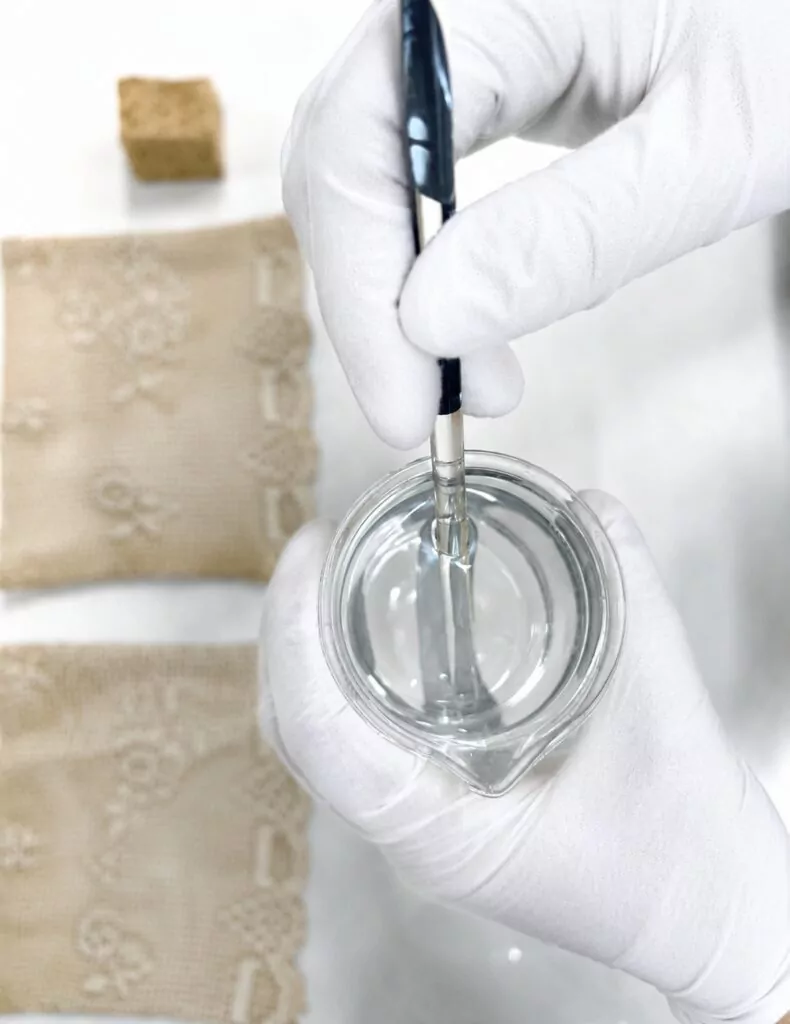
Garments
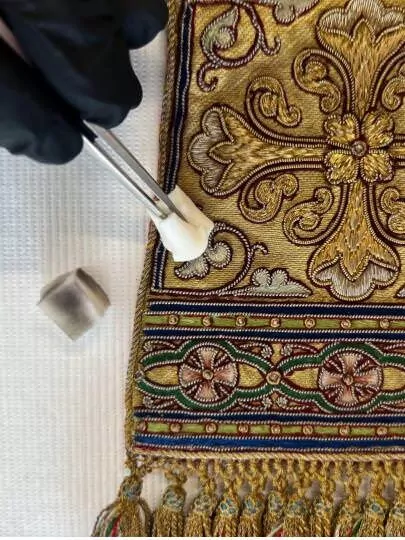
Banners and flags
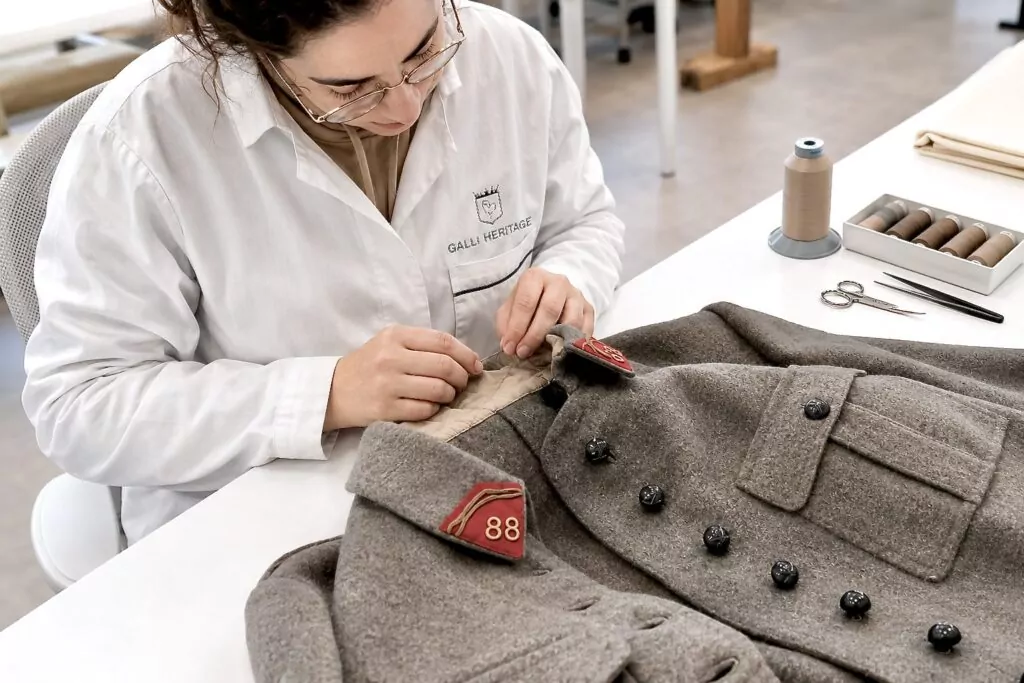
Uniforms
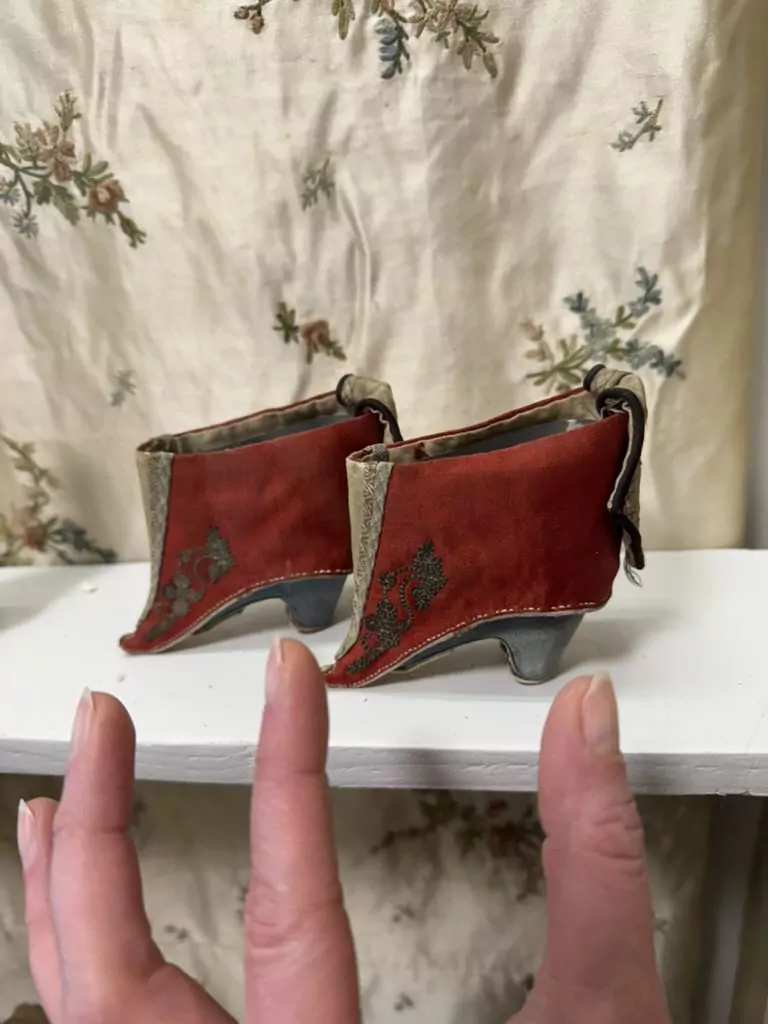
Fashion accessories
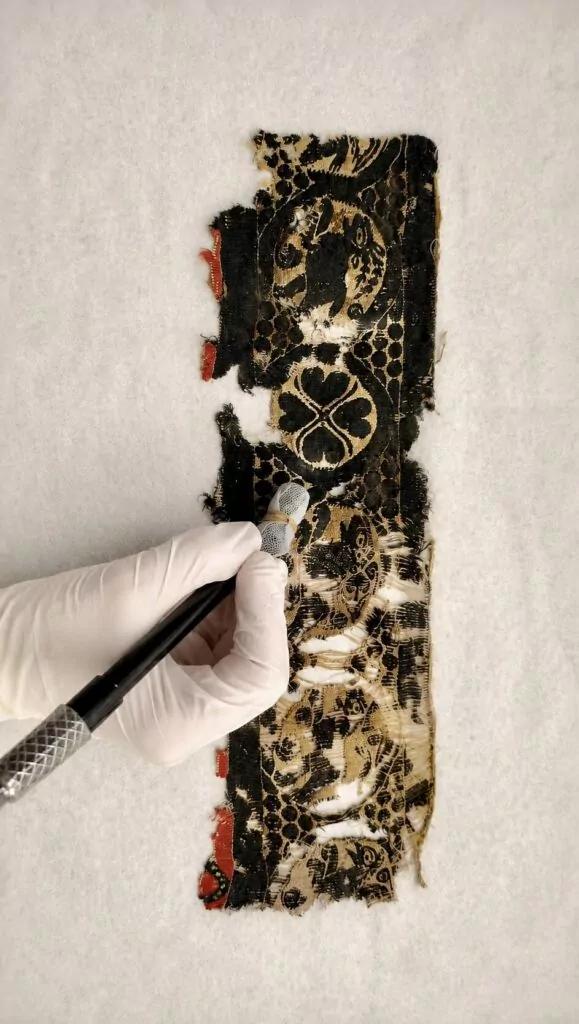
Archaeological textiles
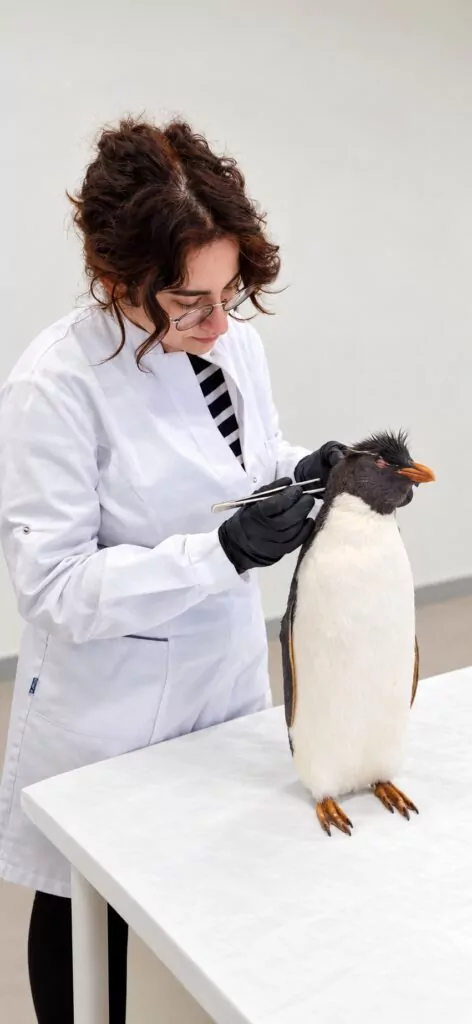
Skins, furs and feathers
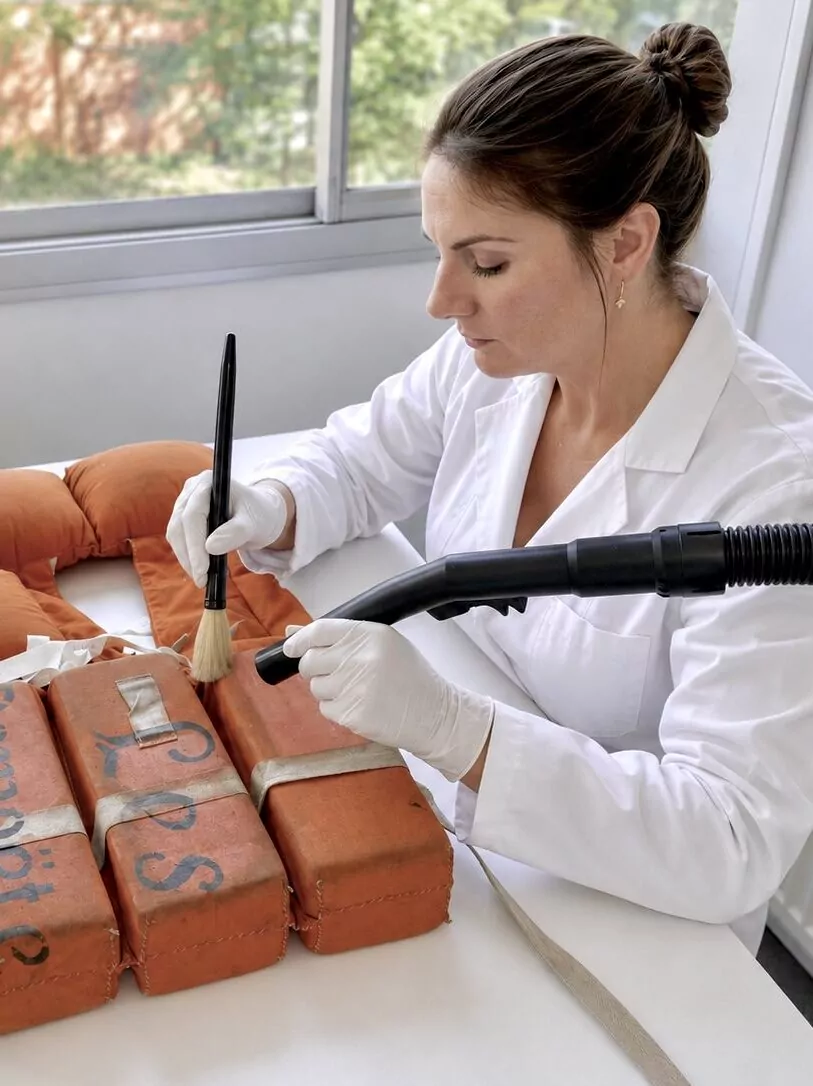
Synthetic and mixed-fibre textiles
Professional Accreditations and Standards
Our conservation and restoration practice is grounded in professional ethics, scientific and technical expertise, and a strong commitment to corporate social responsibility.
Museums of France Accreditation
Conservation and restoration of heritage collections.

E.C.C.O.
European Confederation of Conservator-Restorers Organisations

ICOM
International Council of Museums — Code of Ethics for Museums.
C2RMF
Center for Research and Restoration of the Museums of France

CIETA
Centre for International Research on Ancient Textiles

ICCROM
International Centre for the Study of the Preservation and Restoration of Cultural Property

Responsible Material Selection

Waste Reduction

Passing on Traditional Skills
A restoration project?
Our References and Case Studies
Stories woven together through our clients’ trust.









Every restoration creates a thread connecting the past with the future.
Discover three of our recent restoration projects.
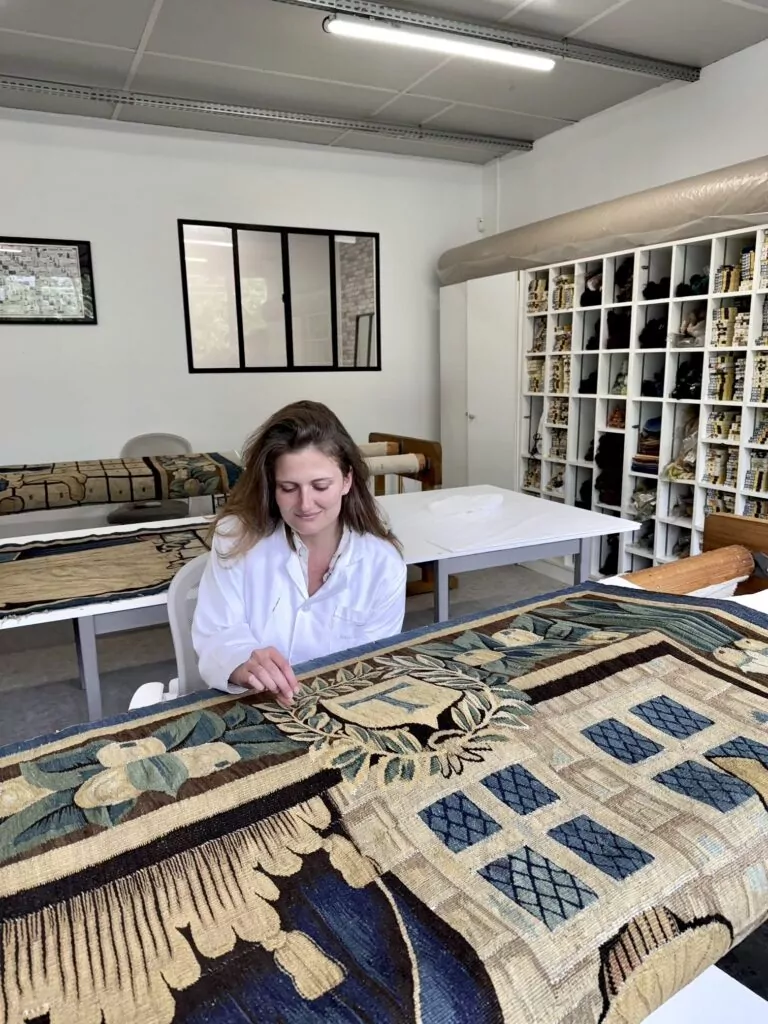
Saint-Antoine-l’Abbaye Museum
Objects
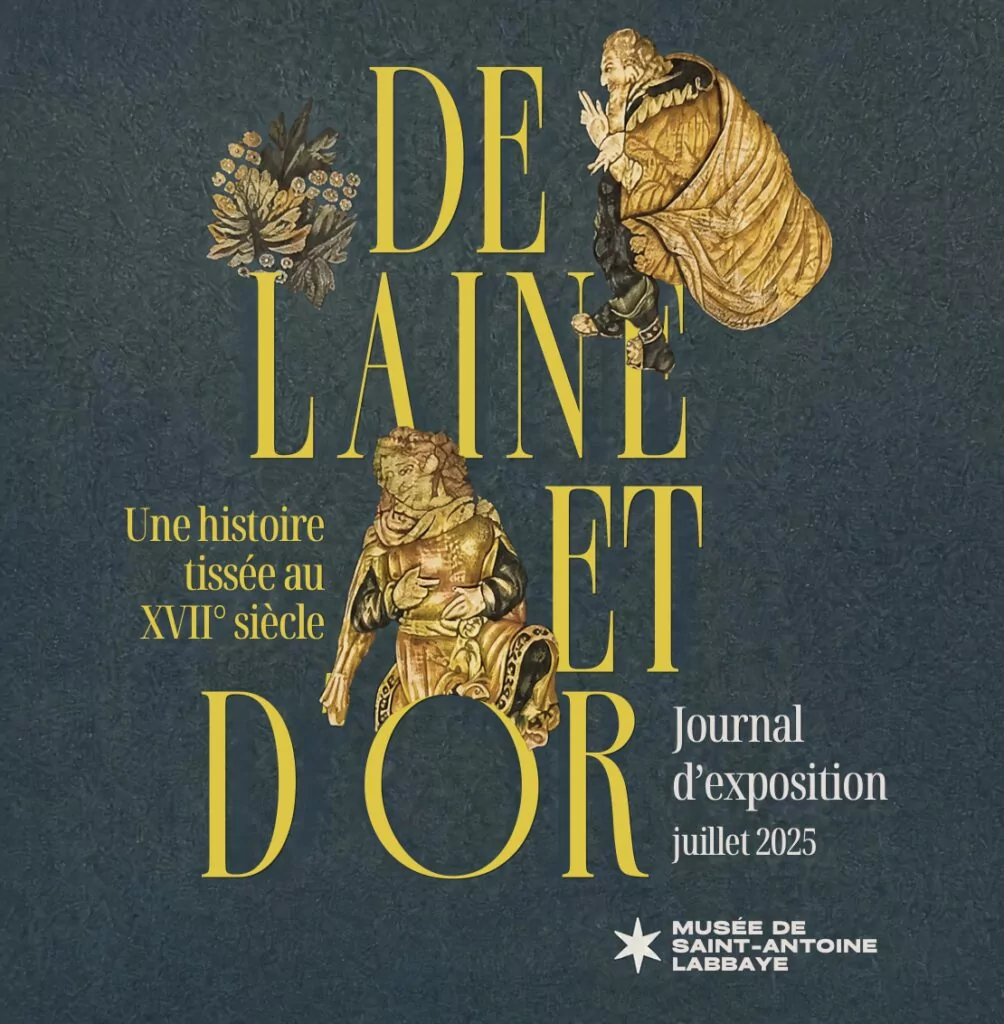
Eight tapestries depicting the Story of Joseph.
Suspended eight metres above the ground, the eight tapestries depicting the Story of Joseph were suffering from an unsuitable hanging system, compounded by their weight and an unstable environmental climate. Taking them down was essential to improve their conservation conditions.
In 2025, for the Of Wool and Gold exhibition, we addressed the major issues identified. The work included removing previous additions, aqueous cleaning following scientific analysis, structural consolidation, relining and the installation of a new hanging system.
The eight tapestries are now stabilised, preserved under improved conditions and easier to handle.
In 2025, the complete set was presented to the public. The tapestries can now be displayed permanently and sustainably in the future.
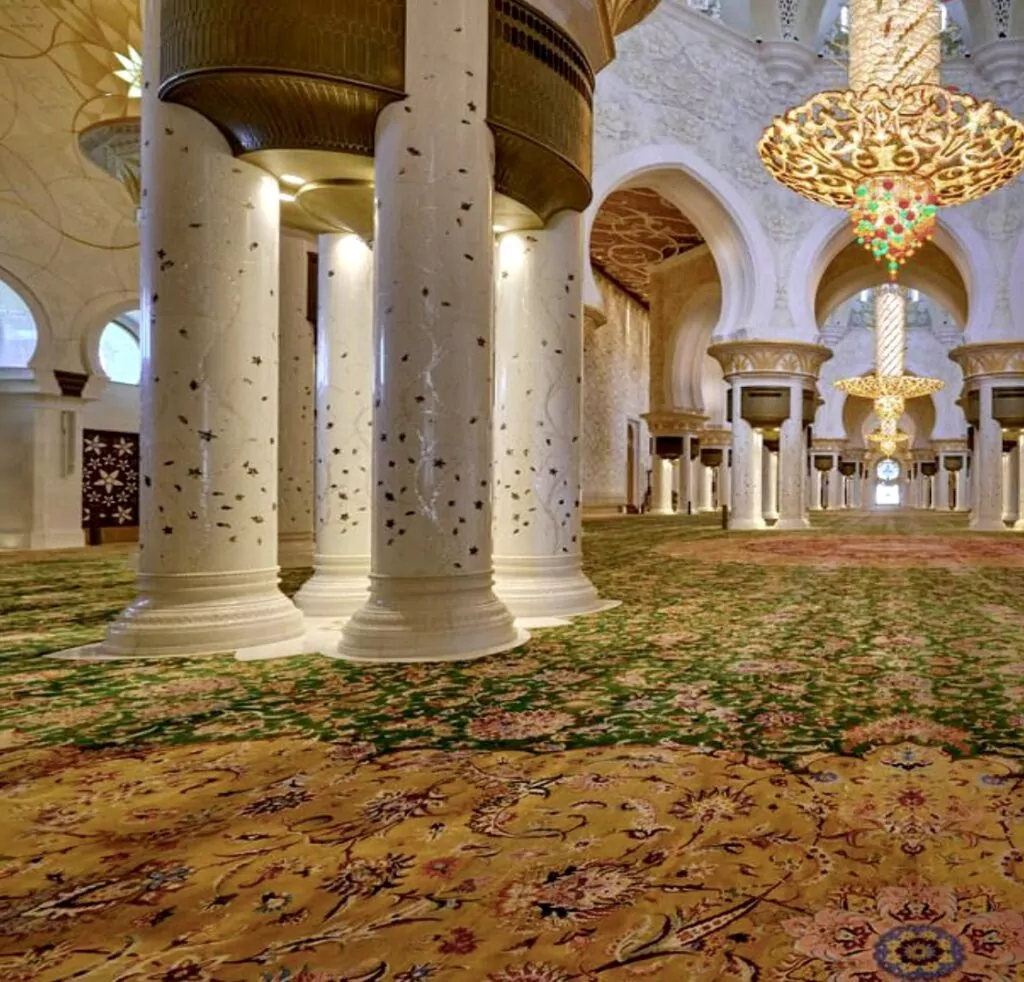
Sheikh Zayed Grand Mosque Museum
Objects
Fragment of the Grand Mosque carpet.
The monumental carpet, covering more than 5,600 square metres and hand-knotted by nearly 1,200 artisans, is one of the collection’s outstanding pieces.
A fragment had been mounted on a wooden support using an oxidised, abrasive adhesive that posed a risk of damage to the fibres.
The fragment was detached using cold steam and subsequently cleaned. Its fringes were carefully rearranged, and a lining was added to ensure its long-term preservation.
Now stabilised and suitable for display, the fragment allows visitors to appreciate the materials, knotting techniques and exceptional craftsmanship of the carpet that adorns the Sheikh Zayed Grand Mosque.
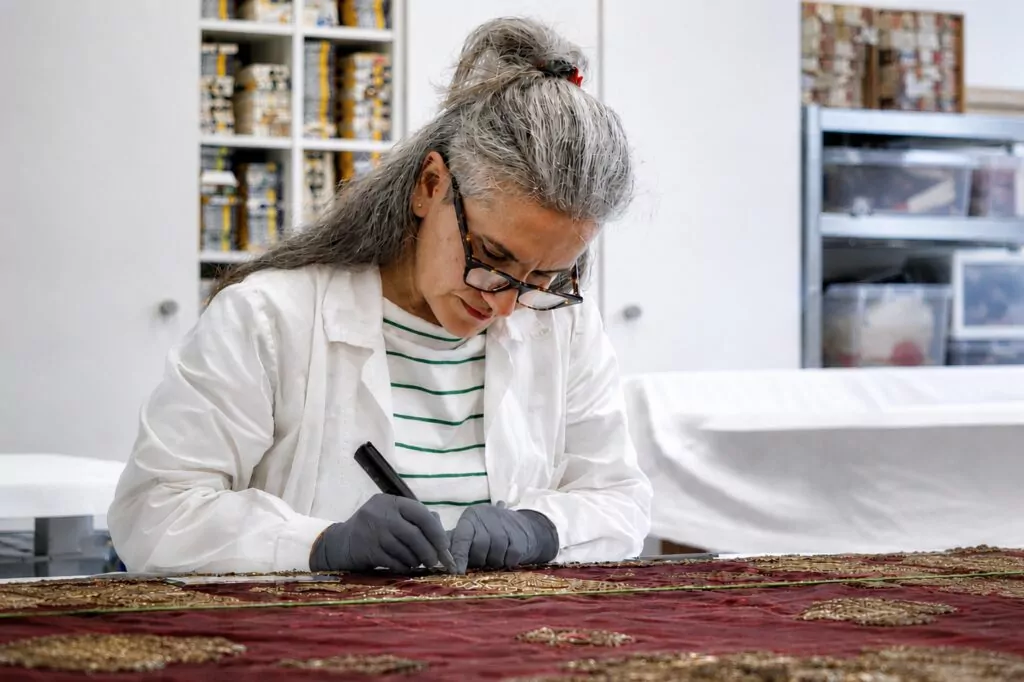
Notre-Dame de Paris Cathedral
Objects
Eleven textiles from the cathedral’s treasury.
As part of the restoration of Notre-Dame de Paris Cathedral’s treasury, an exceptional altar frontal made from the coronation mantle of Napoleon I, dating from 1804, had to be restored before the cathedral reopened.
Its red velvet and gold embroidery showed numerous signs of deterioration, including wear, tears, losses and oxidation.
Working to a tight schedule, our studio brought together several specialists to stabilise the embroidery, consolidate vulnerable areas and meticulously clean the entire textile.
The restoration preserved this precious textile while restoring the clarity and brilliance of its embroidery. Now stabilised, the altar frontal is once again on public display in the cathedral’s treasury.
A restoration project?
LATEST ARTICLES AND PUBLICATIONS
Our achievements, practices and methods
Through our articles and publications, we document our research, lessons learned and discoveries, as well as communications showcasing the restoration work carried out for our clients.
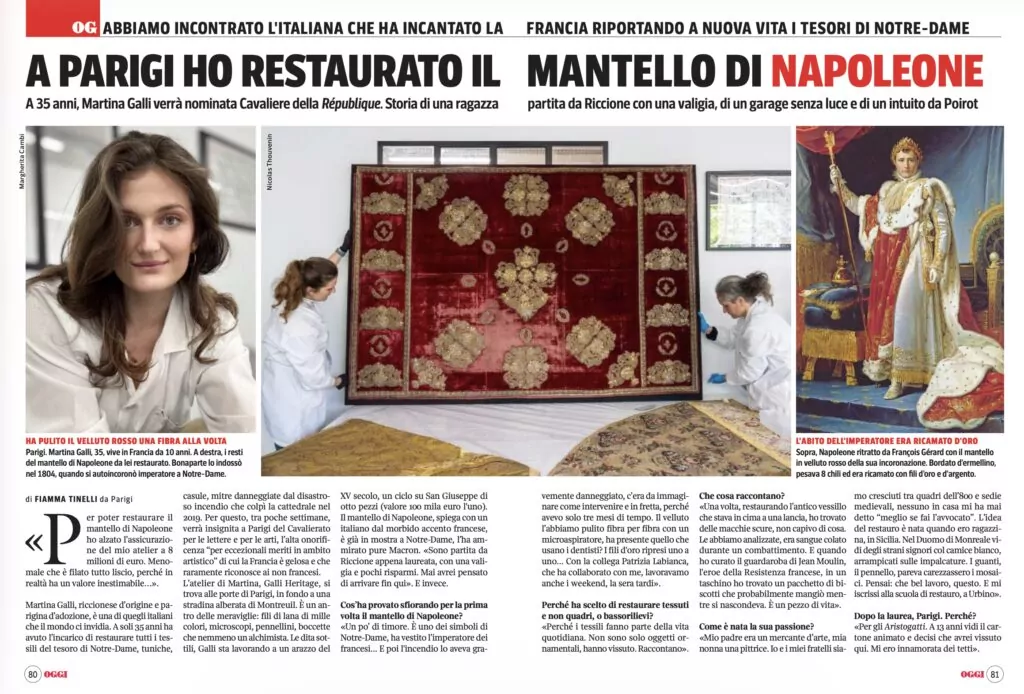
July 2025
Tapestry: A Decorative Art Between Craftsmanship and Tradition
Catalogue of the Musée de Saint-Antoine-l’Abbaye.
Watch the video
Conference — 6 and 7 November 2026
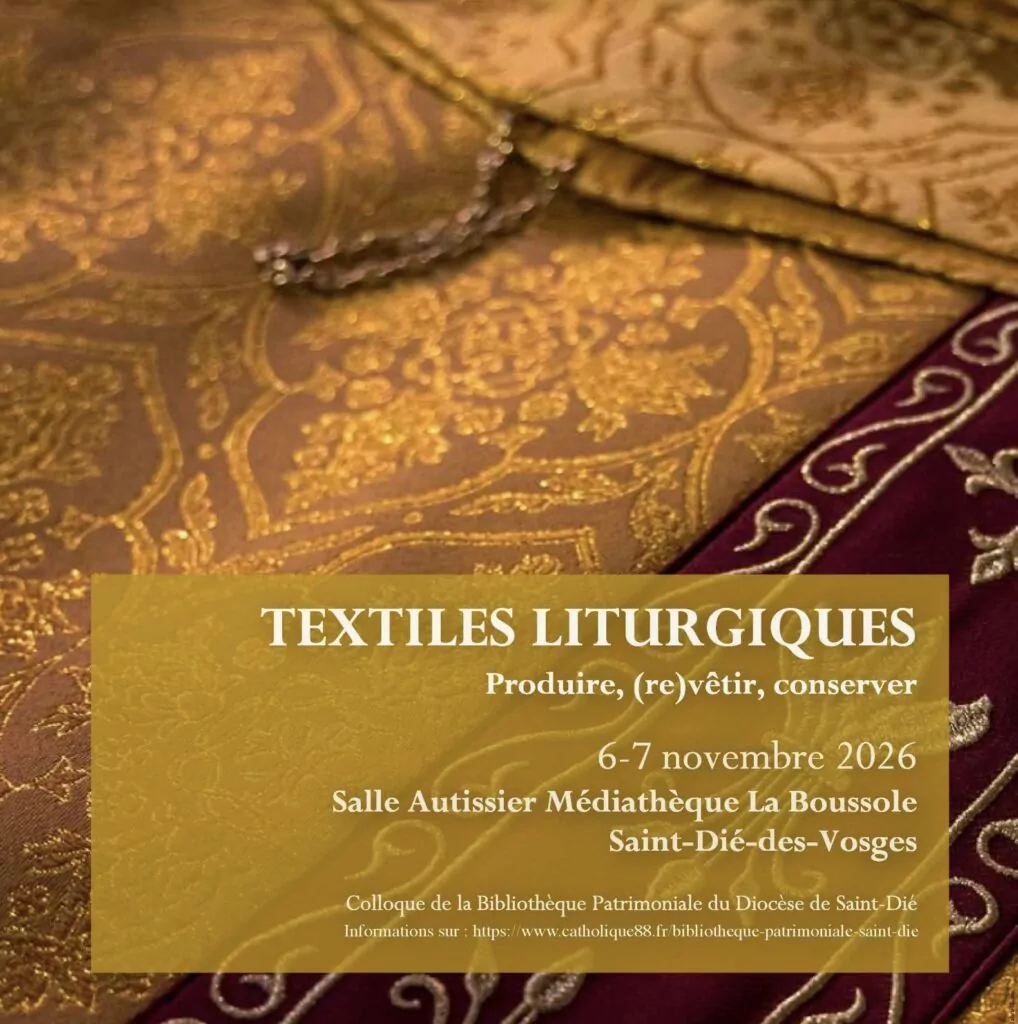
Martina Galli, heritage conservator-restorer, will participate in the conference « Liturgical Textiles : Producing, (Re)Dressing and Preserving », taking place on 6 and 7 November 2026 in Saint-Dié-des-Vosges, France. She will join a panel of experts comprising historians, academics, curators and heritage specialists. Together with Valentina Poletto, she will share her expertise in the restoration of processional banners, exploring the relationship between heritage preservation and the transmission of traditional uses and practices. Venue: La Boussole Media Library, Saint-Dié-des-Vosges, France.